

Why do we collect data from heating, EV, and other devices?
The most valuable thing you can do as a Living Labber is connect your smart meter to our network. That way, you join thousands of other households up and down the country, helping us understand how energy demand is changing. Just doing that alone is brilliant, and we're incredibly grateful to everyone who takes the time.
But there's so much more you can do, especially if you start to add other energy devices around your home. Things like solar energy systems, heating controllers and batteries. As more of these become available, and as prices come down, more people are using them in their homes.
If that's you, we want to know. Because the more we know about the devices you use, the more trials we can invite you to take part in. Which in turn means we can do more to help the energy sector understand changing energy demand, and create low carbon products that will work for people like you.
What sort of devices do we mean? Let's have a look at some of them.
-10.jpg?2026-03-18T12:31:53.821Z)
-38.jpg?2026-01-30T14:21:11.611Z)
Electric vehicles
If you have an electric vehicle (EV) and charge at home, there are ways we can gather data about its charging patterns. In partnership with a company called ev.energy, the Living Lab can closely monitor how people are charging their cars. We can see patterns of customer behaviour over time and geography, which is an essential part of our research as the market for EVs continues to grow.
Some trials take things one step further, with something called “smart charging”. That’s when a third party like ev.energy, can control how your EV is charged, remotely - for example, by instructing it to activate at the best times for price and efficiency. Some of you smart charge your cars already to take advantage of agile energy tariffs (for which prices vary day to day). But the Living Lab also uses smart charging as part of some of our trials, to test ways of balancing energy demand on the grid.
In our recent trial for Scottish and Southern Electricity Networks, about 100 Living Lab households allowed us to manage their charging remotely (find out more about this project). This allowed us to test new ways that energy networks might help balance demand on the grid.
-45.jpg?2026-01-30T14:21:50.438Z)
Heating controllers and temperature meters
One of the things we want to understand about energy is how it translates into what we call 'outcomes' - the things people use energy to actually do. Heating your home is an outcome, and we want to drill into the details: what temperature is the thermostat set at? What temperatures are you actually getting? How long does it take for the home to warm up, or cool down?
We’re currently running a project called Homes for Net Zero, using data from 1,000 homes with gas boilers and solid walls - in other words, homes that couldn't have cavity wall insulation installed. The goal is to help the government find ways to improve energy efficiency in homes that are harder to insulate. Along the way, the project has provided evidence that during cold weather spells, people don’t always manage to keep their homes at what’s considered a comfortable temperature. It might sound obvious, but it's important to have insights backed up by real data, rather than assumptions.
There are different kinds of heating controller, from different brands, that do different things. The Living Lab can currently connect to tado heating controllers and Homely heat pump controllers. As with some EVs, some controllers also allow us to control a heating system remotely. We’re currently running a trial with our Homely homes in which we’re shifting the operation of their heat pumps a little to test ways of managing energy demand, while ensuring the homes stay warm.
As part of the same project, we've given out 1000 temperature and humidity meters to Living Lab households, so that we can better understand the effect their heating system has. What sort of actual results does it deliver, over what sorts of timescale? How warm does it get, and what's the effect on internal humidity?
The goal is to understand how people's heating systems are behaving, so we can work out the best ways to ensure everyone stays comfortable, whilst reducing carbon emissions from heating.
-15.jpg?2026-01-30T14:22:59.389Z)
Solar panels and home batteries
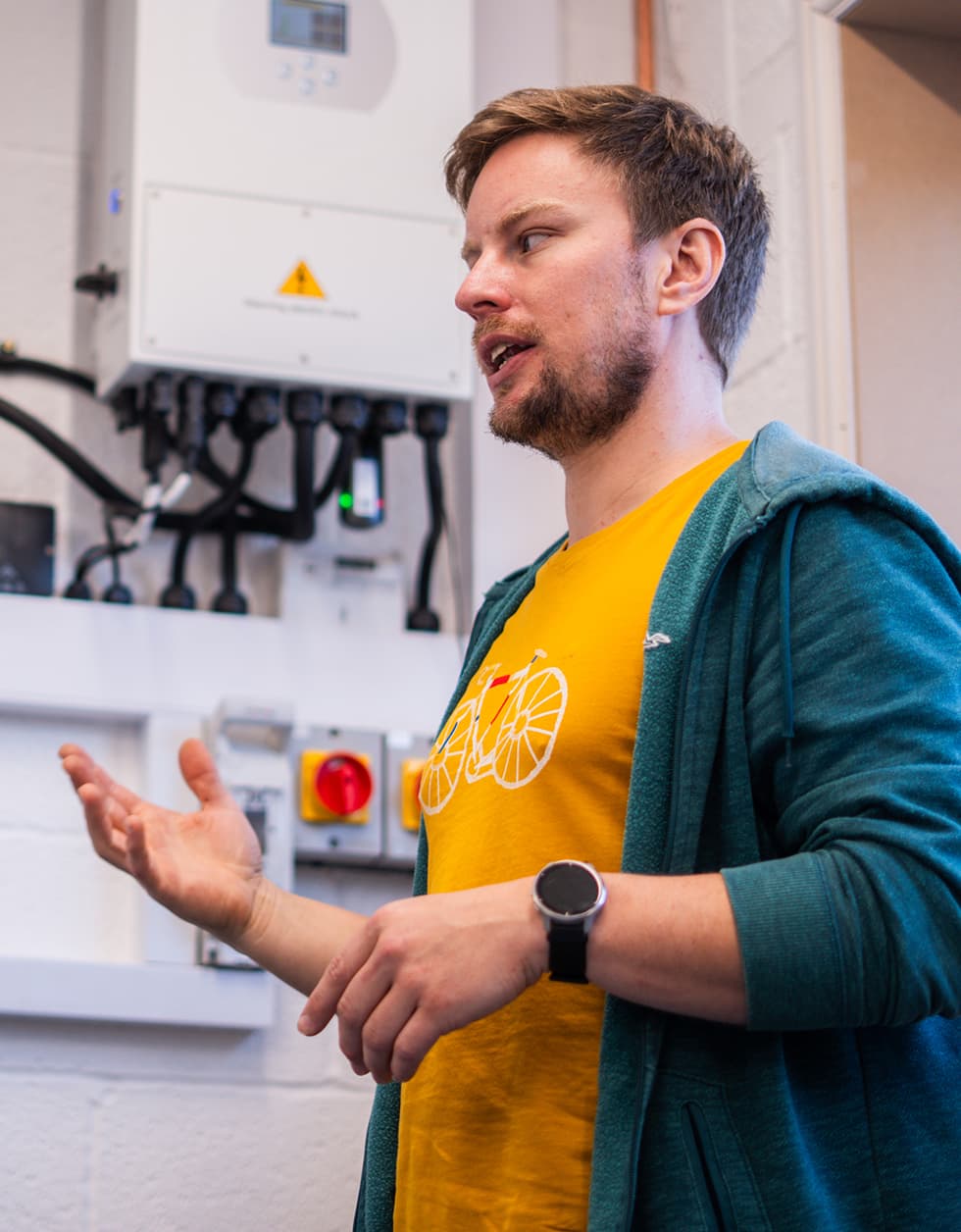
A recent new addition is photovoltaic panels (aka solar panels) used to capture energy from the sun. If you have a solar system like this installed, there’s a good chance you’ll be able to connect it to the Lab. This is done by making a connection with the inverter, an essential component of every PV circuit, used to convert “raw” direct current from the PV cells into usable alternating current. The inverter already acts as a central hub in a solar energy system; it’s the best place for us to connect and gather data.
Energy from PVs is usually stored for later use in a home battery fixed to the wall. We’ve just launched support for direct connections with some battery brands - we’re working hard on building up a list of partners, and we expect it to grow significantly in the next year.
-025.jpg?2026-01-30T14:24:04.677Z)
Consumer Access Devices (CADs)
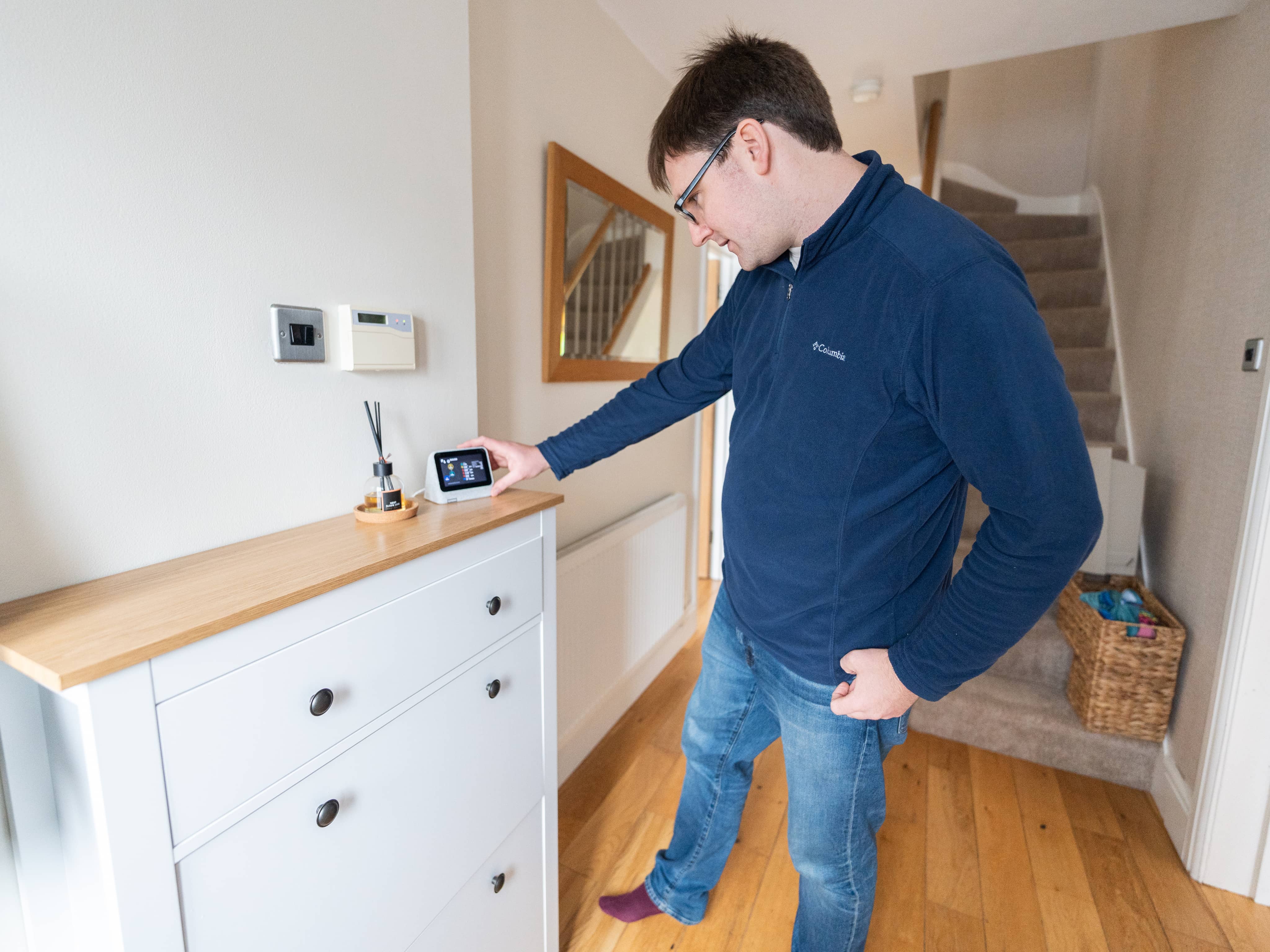
A CAD is a tiny box that connects to your smart meter, and uploads data about your energy usage in real time. By default, smart meters record data in 30 minute intervals, and upload it once a day. But the data from a CAD is measured second-by-second - it’s much more granular, and the insights we get are much richer. If you have an in-home display that shows your smart meter use in real time, that’s the kind of data we can get from a CAD.
That's really helpful to us at the Living Lab, which is why we sometimes give people a CAD when they join an appropriate trial.
Accessing data from a CAD helps us detect nuances in consumer behaviour that we couldn't see before. It's not just how much electricity your home used each half hour yesterday, but what’s happening right now? Things like, are you charging your car right now? When is your heat pump running? These might sound like small things, but at scale, across lots of homes: this is the sort of information that we're very interested in. When we’re running trials where we may be controlling EVs or heat pumps, it’s also really helpful to know exactly what’s happening in the home moment to moment.
As more homes get heat pumps, batteries, solar energy, electric vehicles, we can build up a richer understanding of what all of those things were actually doing, every moment of every day.
(Some people may already have a CAD of their own from their energy supplier, but we might need to give you one of ours anyway as we may not be able to access the data from yours).
Connect what you can
What it all boils down to is simple: data is the essential ingredient that makes the Living Lab work, so the more data we can gather from our wonderful Labbers, the better. The more devices you use, and the more of them you can connect to the Lab, the better the insights we can build.
We use those insights to help industry test performance, interoperability, and reliability in real homes of all different shapes and sizes. We share what we learn with our partners in the energy industry, and with policymakers and researchers at the Department for Energy Security and Net Zero (DESNZ).
So we’re asking: please connect everything you can! If you have a device that you can connect, please take the time to connect it. The more devices that get connected, the more data we can gather about energy use at scale, across the UK. That's how we get new insights for the benefit of everyone.
Every time someone signs up to join the Living Lab, we ask them to fill out a detailed profile about their home, the people who live there, and the devices they use to manage their energy use. We've said before how important it is to keep that profile up to date - it means the picture we're painting stays as accurate as possible. And it helps us know which Labbers might be eligible for different trials.
It's just as important to connect all the devices you've got that can be connected. You can see a list of which brands and devices are compatible in your Living Lab profile. We can help you get things connected, if it gets tricky.
As always: thank you for being part of the Living Lab. Every device connected, every tiny scrap of data collected, it all makes a difference.
-79%20(1).jpg?2026-03-18T21:45:14.015Z)