

Heatio: What if you could see your energy future?
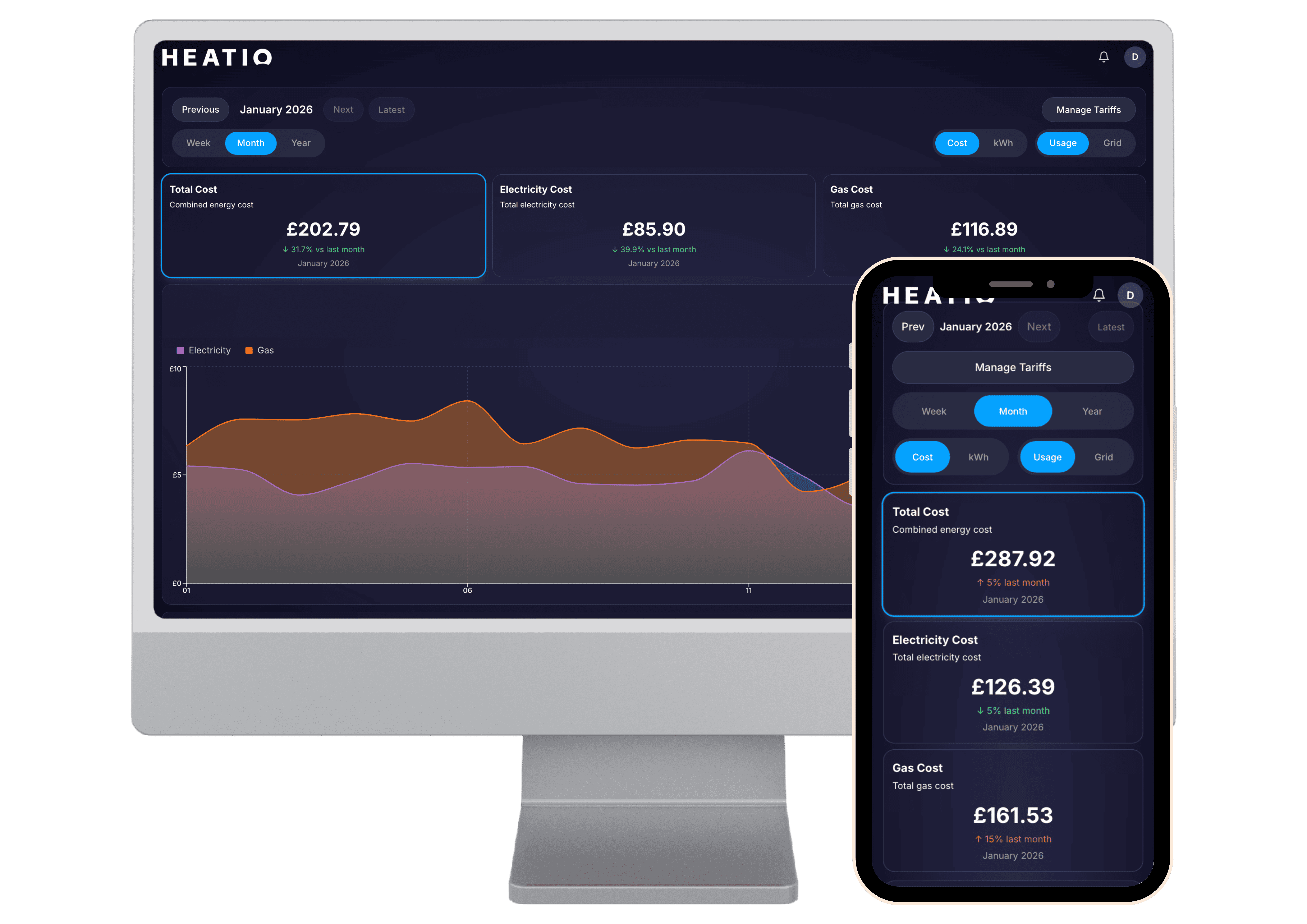
What if you could press a button and instantly see how solar panels, a battery, or a heat pump might change your bills?
That’s exactly the kind of idea we explored with Labbers in a trial with Heatio, who use home energy data to offer personalised recommendations on improvements. The goal was straightforward: to find more effective ways to provide households with advice that feels personal, practical, and actionable.
The team initially explored how best to present tailored retrofit advice to households. As the work progressed, this evolved into a more dynamic approach: testing a digital energy insights tool that could surface real-time opportunities and support a new proposition — a solar and battery subscription with no upfront cost.
Sensors in real homes
The project began with home energy monitoring on the Heatio platform. We used smart meter data alongside regional weather data and internal temperature and humidity sensors to generate property-level insights.
This monitoring was primarily used to understand occupant behaviour and the thermal performance of each home — specifically, when heat was being produced and how quickly it was being lost — by applying the Smart Meter Enabled Thermal Efficiency (SMETER) methodology to calculate the efficiency of the home (in technical terms, the heat loss transfer coefficient).
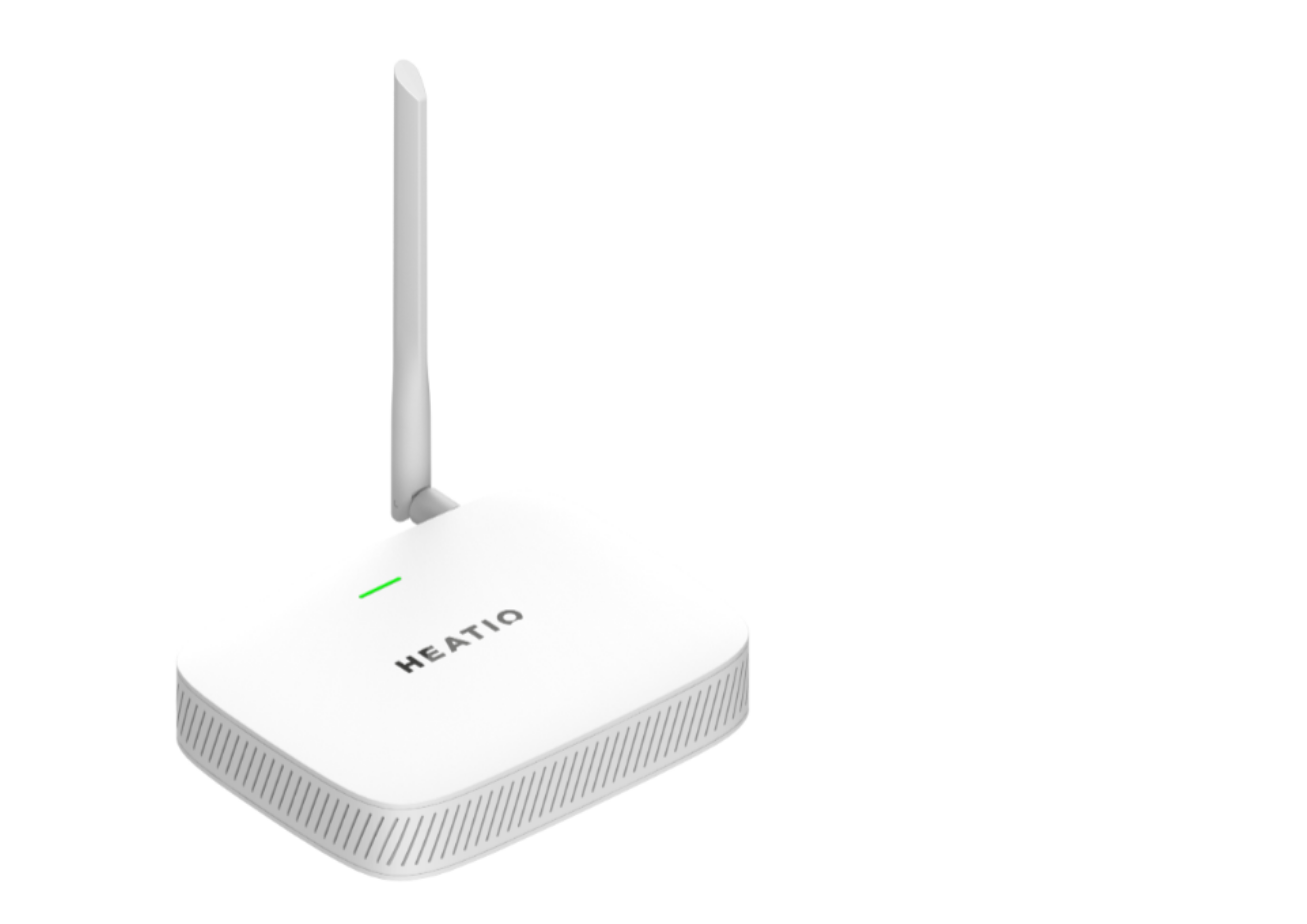
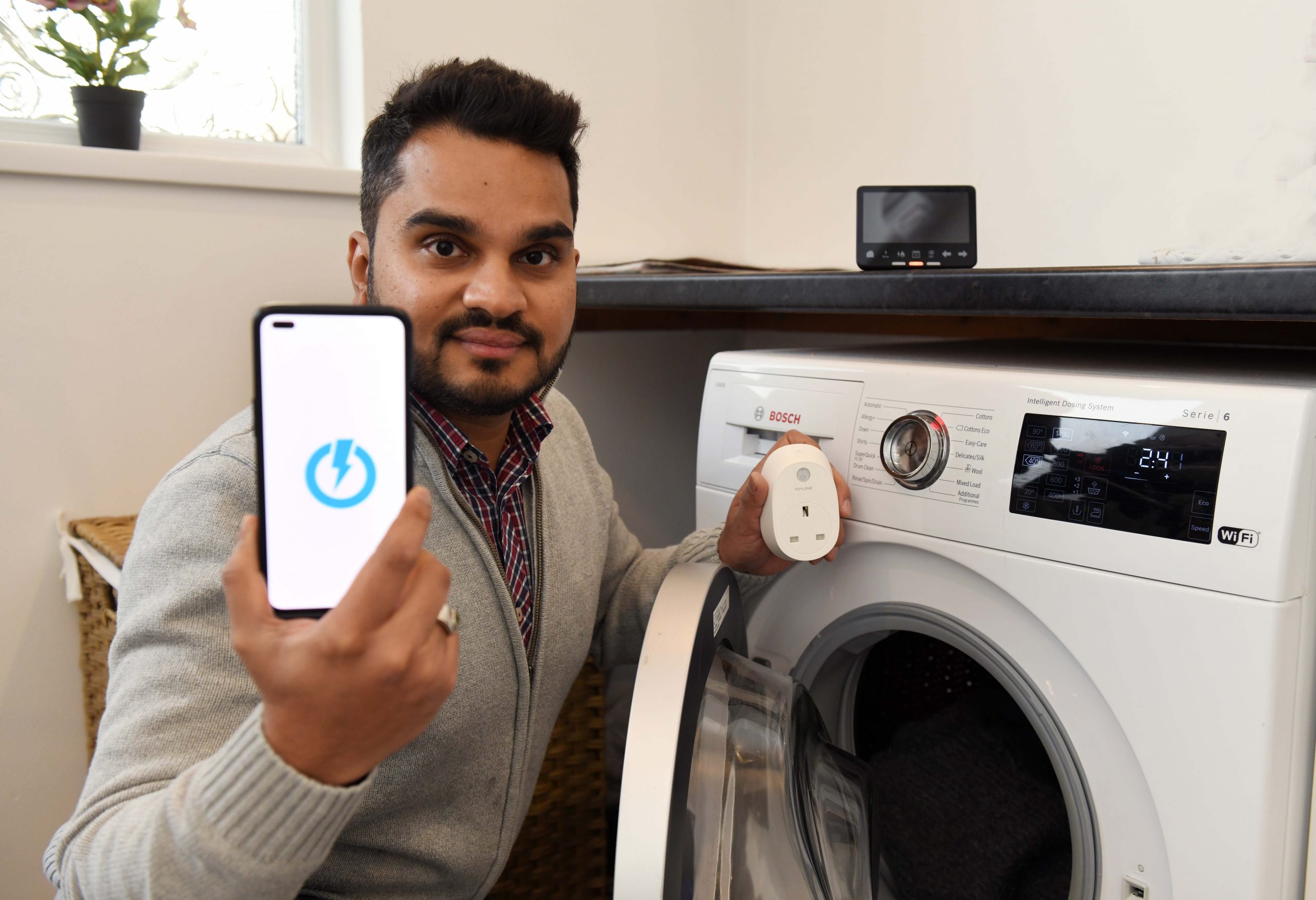
Participants installed temperature and humidity sensors to generate property-level insights.
Building on this, Heatio also tested how willing households were to install sensors, the extent to which these sensors improved the accuracy of thermal performance assessments, and how users experienced the process of ordering and setting up the gateway and sensors in their homes. This work helped to validate both the end-to-end user journey, and the practicality of collecting high-resolution data in real homes.
Home energy modelling
Using the data collected from each property, Heatio ran simulations through the Heatio Home Energy Model.
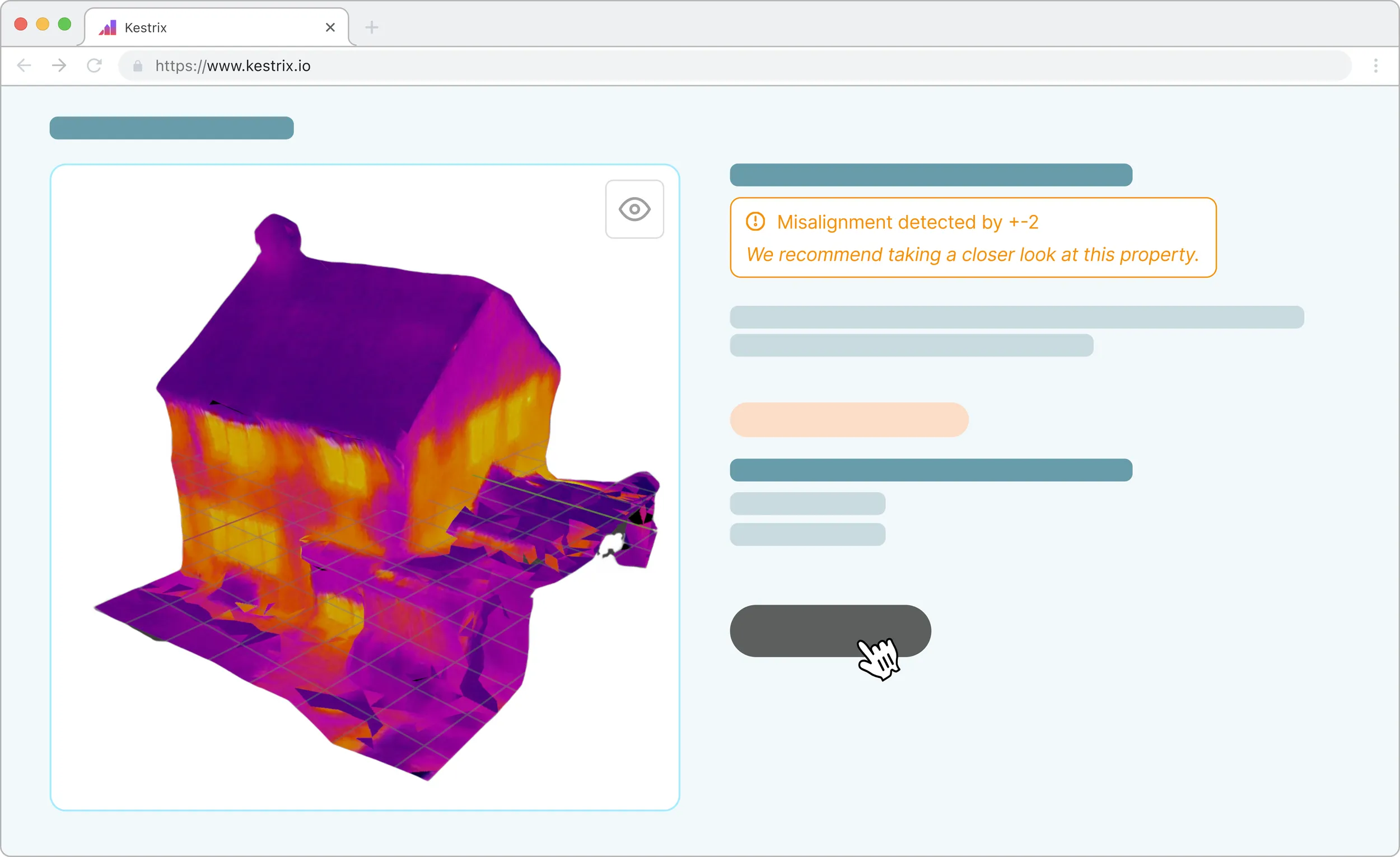
The trial enabled Heatio to test how the model could simulate the impact of different technologies — including solar PV, heat pumps and battery storage — using real household data. Because the simulations were based on how the specific home (and the people living in it) actually used energy, the outputs were more accurate and more useful.
Heatio’s Home Energy Model is now live in its first release as part of the Heat Pump Ready licence for accredited heat pump installers. Heat Pump Ready is designed to improve qualification, reduce wasted surveys, and help customers — supporting Heatio’s wider mission to make clean energy affordable and accessible for everyone. It has been developed to align with and ultimately integrate into the government’s Home Energy Model (HEM), supporting net zero, retrofit, and housing
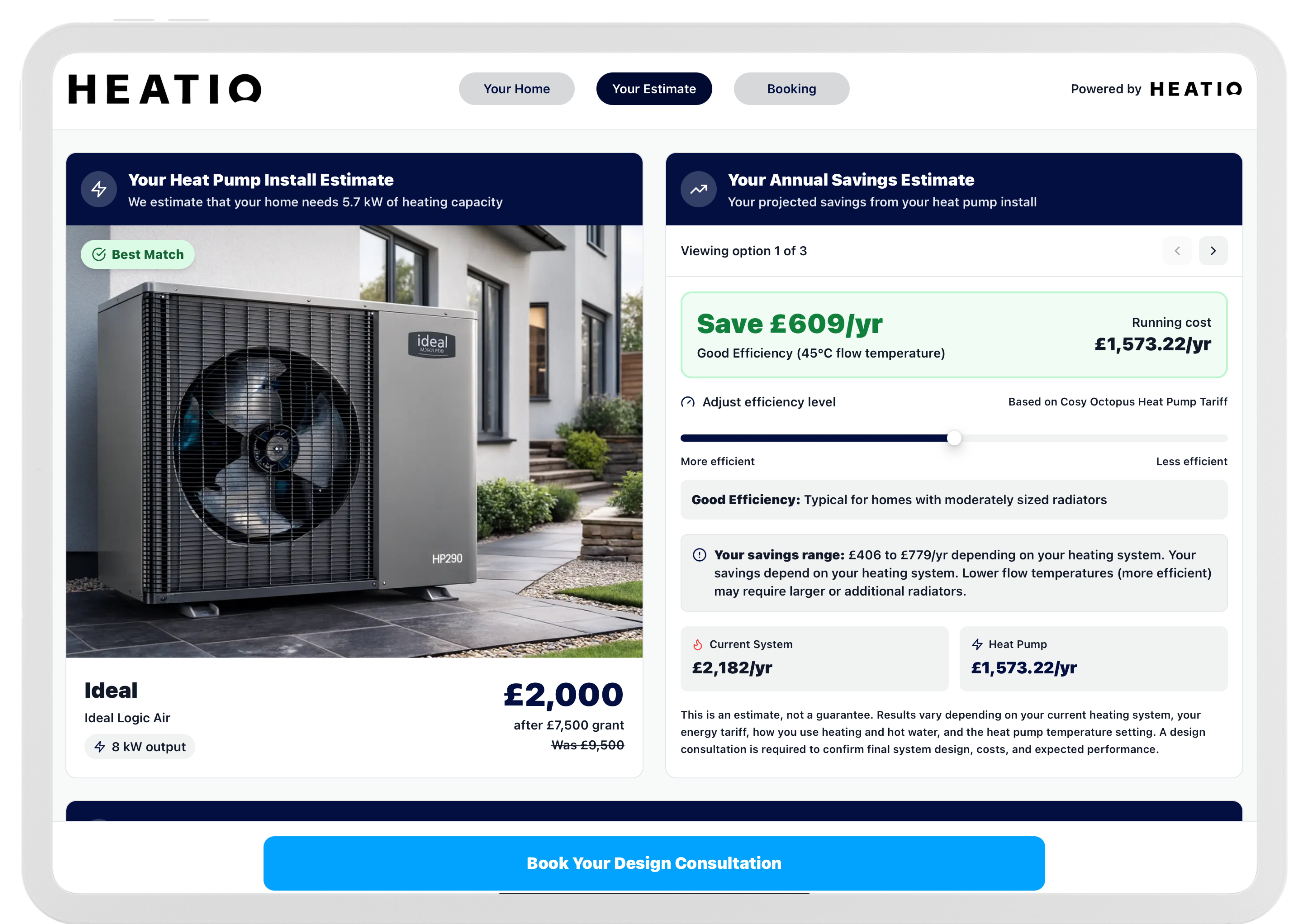
Heatio's Home Energy modelling simulates the impact of different measures to help homeowners make decisions.
What else Heatio learned from this project
In addition to insights from customer interviews, Heatio also gained valuable technical insights from working with Labbers’ smart meter data. For instance:
- It takes more than a year of data to confidently judge savings. Approximately 3–4 years of energy data (and local weather) provide a more accurate picture of a home’s baseline and likely impact from changes, such as installing a heat pump. One unusually warm or cold winter can skew results; longer histories give a more typical picture of savings.
- Getting people to install and keep extra sensors in the right places is tricky. It’s often better to use existing devices and smart meter data where possible.
- Better, trusted modelling is key to interpreting smart meter data. Heatio shifted to align with HEM, providing clearer and more reliable recommendations to households and installers.
How this project changed Heatio’s product
This project started with the idea of a personalised report for homeowners, but evolved into testing an interactive tool and a new type of solar offer. That shift helped us explore what people really need to feel confident about saving energy at home.
Labbers’ feedback prompted Heatio to change from focusing on home energy management to home energy monitoring, gathering longer term data from smart meters and existing devices people may already have in their homes, e.g. Tado, Hive, Nest. This led to the development of Heat Pump Ready.
A huge thank you to everyone who took part. Your curiosity and your questions are exactly what makes the Living Lab so valuable. Every “what if?” you ask is helping to design the future of energy services.
What Labbers told us
- Labbers found the prototype to be clear, engaging, and easy to follow. Many said it helped them better understand how their household uses energy and what drives those patterns.
- At the same time, people felt that simply seeing data wasn’t enough. They wanted tools that go further — offering guidance, tips or prompts to help them act on what they see. The idea of receiving personalised insights that support real-time decisions really resonated.
- Several Labbers said the experience made them rethink their energy habits. Some planned to move high-energy activities to cheaper or lower-carbon times, adjust heating schedules, or explore renewable options such as solar panels or home batteries in the future.
- Labbers also appreciated being able to explore how different energy options might affect their costs over time. Seeing potential outcomes made longer-term choices, such as investing in new technology, feel more achievable and informed.
- Most participants responded positively to the new offer. They liked the idea of making clean energy more affordable and accessible, while emphasising the need for clear information about what’s included, how payments work, and how it fits around everyday life.
- Overall, Labbers valued advice and tools that are simple, transparent and tailored to their needs — anything that helps turn energy choices into practical, confident action feels like a step in the right direction.
Why your feedback matters
This project highlighted the value of real-world feedback in testing early ideas. Labbers helped show what makes energy insights genuinely useful — not just informative. Your comments reinforced the importance of designing tools that turn data into action, helping people feel more confident and in control of their energy use.
The sessions also emphasised the importance of clear and transparent communication in building trust. Whether it’s an interactive tool or a new type of energy offer, people respond best when information is simple, practical and personal. That clarity is what turns curiosity into action — and interest into long-term engagement.
Want to get involved in projects like this? Sign up to the Living Lab today.
Share this article
Recent articles
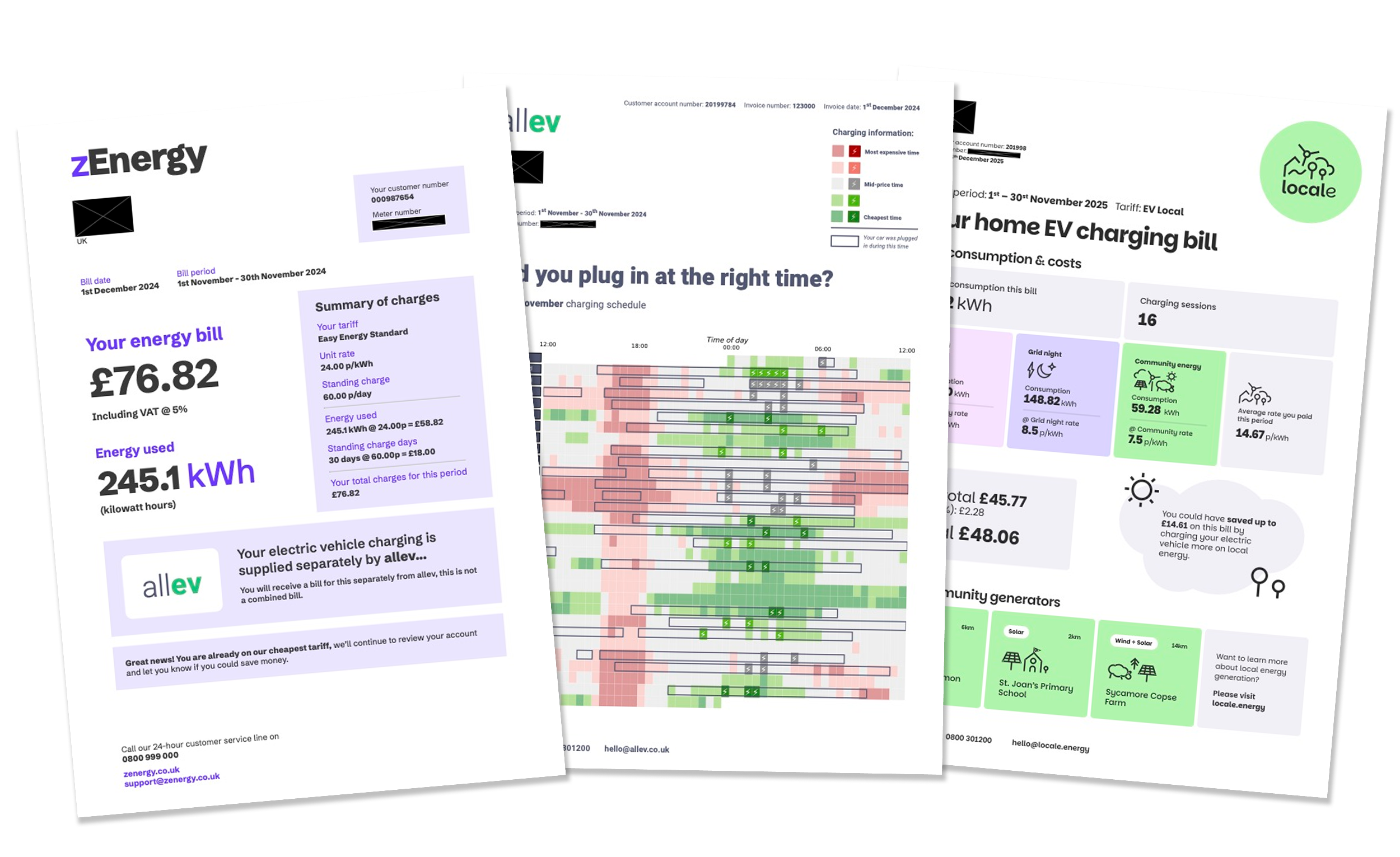
Join the Living Lab today!
It only takes a few minutes. Help us make energy cleaner, simpler, and more affordable for everyone!
Need some help? Contact the Living Lab team